
Photo, video or trading cards: choosing the right AI format
Three formats, three different jobs. A practical guide to picking the one that matches your space, your audience and what you want to happen afterwards.
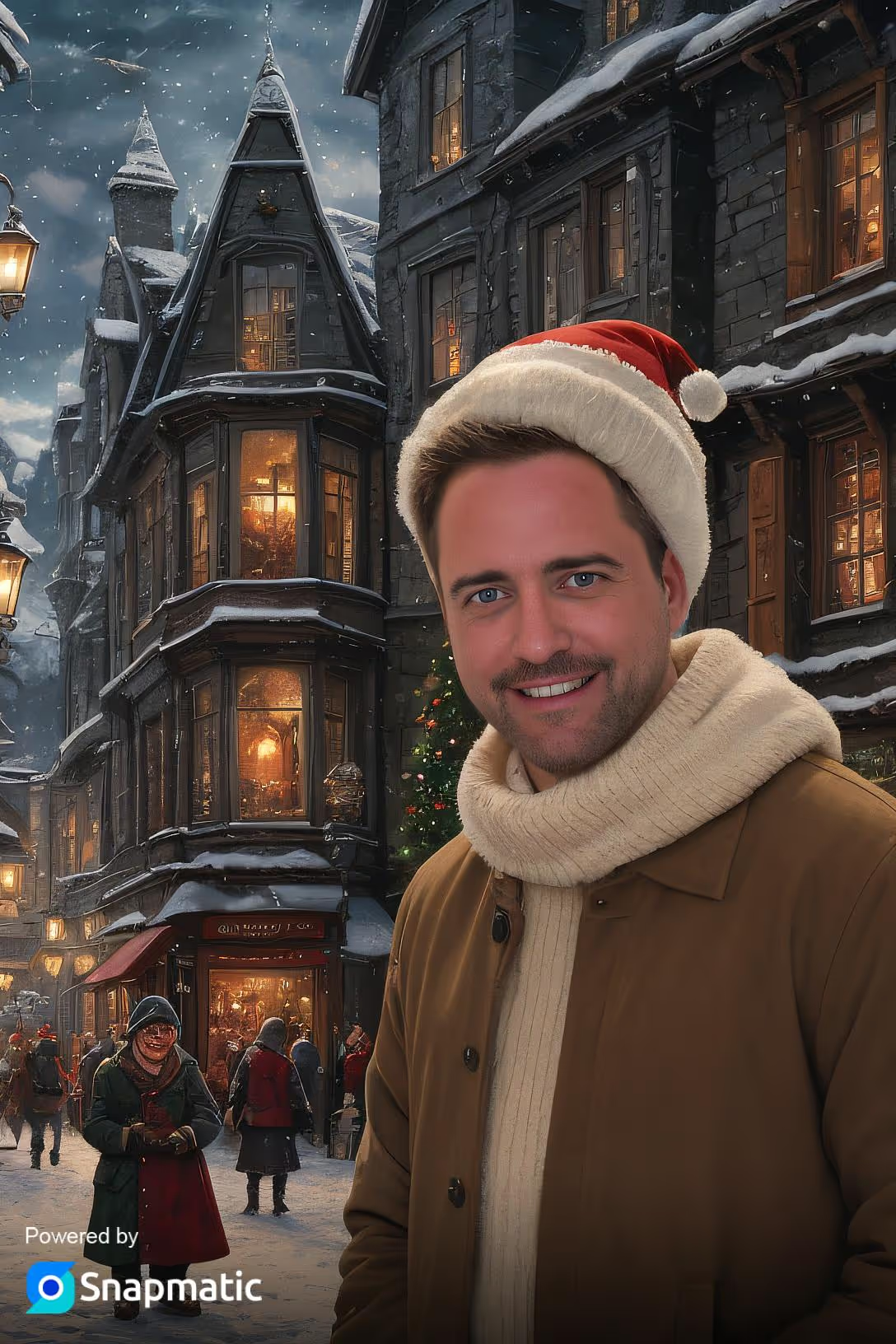
The formats are not interchangeable. They share the same theme direction and the same capture, but they produce different behaviour afterwards, and the right choice comes from deciding what you want a guest to do once they walk away.
The photo booth
The default, and usually the right default. It is the fastest per guest, which makes it the format for high footfall. It produces a single still that is immediately postable, and it asks the least of the guest: one photo, no decisions.
- Best for: high volume, tight schedules, busy stands
- Output: a branded still, delivered in seconds
- Guest effort: minimal
- Afterwards: lives on a phone and a social feed
The video booth
Choose this when the destination is a feed that rewards motion, or when the campaign idea genuinely needs movement to land. It asks slightly more of the guest and of the space, and in exchange the output travels further on platforms where a still gets scrolled past.
- Best for: social-first campaigns and launches
- Output: short branded motion built from the same capture
- Guest effort: a little more than a still
- Afterwards: performs where video performs
The trading cards
Choose this when you want the activation to survive the event. It is the only format that leaves the venue as an object, and it is the one that keeps working on a desk weeks later. It suits audiences who already collect things and campaigns that want a physical footprint.
- Best for: fan audiences, launches, anything that needs a long tail
- Output: a physical personalised card, ideally with a digital twin
- Guest effort: minimal, with a wait for the print
- Afterwards: sits on a desk and keeps being seen
Pick the format by what you want to happen the week after the event, not by what looks best on the floor plan.
Running more than one
A larger activation can run two formats side by side, and because the theme direction is shared, the output stays coherent rather than looking like two different campaigns bolted together. The usual pairing is a photo booth for throughput with trading cards as the thing people queue a little longer for.
Whatever the combination, decide it before the theme work starts. The theme is easier to build well when it knows what it is going to be printed on.


